How to Make Are You Dead Like App?
This article explores how to build an “Are You Dead?”-like personal safety app designed to help individuals stay connected and protected in emergencies. It explains the core concept of scheduled check-ins, where users confirm their safety, and alerts are sent to trusted contacts if they fail to respond. The guide also covers essential features, advanced safety functionalities, target audience, technology stack, development approaches, and monetization strategies—helping founders create a reliable and scalable personal safety solution for modern lifestyles.

Published Date: March 24, 2026
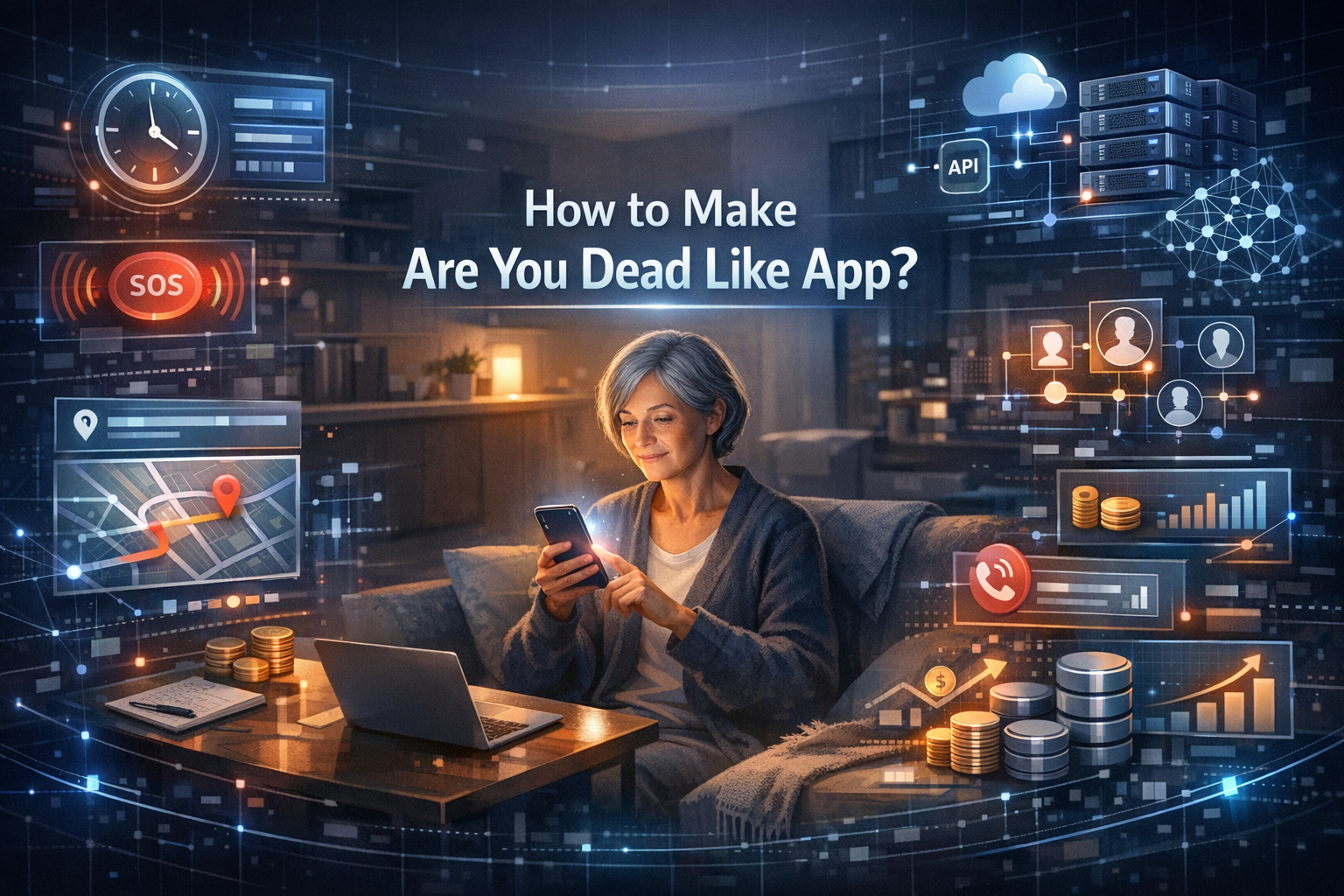
Personal safety apps like “Demumu : Are You Dead?” solve a growing problem in today’s increasingly independent and isolated lifestyles. Designed especially for people living alone or far from family, these apps provide a simple yet powerful reassurance system—making sure someone always knows you’re okay.
At its core, the concept is minimal: users are prompted to “check in” at scheduled intervals, and if they fail to respond, the app automatically alerts trusted contacts. Despite its simplicity, this idea has proven incredibly effective, even topping app charts around early 2026 and sparking a surge in interest in creating similar personal safety apps.
Planning to create an “Are You Dead?” like app? Here’s a smarter way to get started.
At its core, the idea is simple yet powerful: “Are you okay?” and making sure that message reaches the right people at the right time. However, modern alternatives like Friendo go a step further by asking “Do you need help?”, transforming a basic check-in tool into a more proactive personal safety solution. Depending on your vision, you can keep the concept minimal or expand it into a more advanced safety ecosystem.
The first step is to clearly define your core features. Most apps in this space include scheduled check-ins, push notifications, emergency alerts, GPS location sharing, and a panic button for instant distress signals. Once your feature set is finalized, the next decision is your development approach—whether to build a fully custom app tailored to your needs or opt for a white-label solution to speed up time-to-market.
Building a personal safety app like “Are You Dead?” involves much more than just a simple check-in feature. From defining the right functionality to ensuring reliability in critical situations, every detail matters. Let’s break down all the key aspects step by step so you can move forward with a clear strategy and a well-informed approach.
Launch Your Own “Are You Dead?” Like App within Weeks
Skip months of development and go live faster. We already have a working personal safety app demo packed with essential features ready to be customized and launched in just 3–4 weeks for $4,000. Let’s help you build and launch your own “Are You Dead?” style app and get to market before anyone else.
Book a Free Strategy Call
How Demumu : Are You Dead? Like Apps Are Solving Global Safety and Isolation Challenges?
The numbers tell a striking story.
- In China, 120 million people live alone, a figure expected to rise to 200 million by 2030.
- In the United States, 36% of adults report frequent loneliness
- In Japan, cases of “lonely death”—people dying alone and remaining undiscovered for weeks or months—have tripled since 2000.
The fear is real: many individuals face life-threatening emergencies without anyone noticing, leaving them isolated in critical moments. As one Demumu user put it, “This is the first time someone cares whether I’m dead or alive.”
Apps like Demumu (“Are You Dead?”) and other personal safety platforms have emerged to address this growing issue.
By providing automated check-ins, emergency alerts, and real-time monitoring, these apps ensure that individuals living alone are never truly isolated, giving peace of mind to users and their loved ones. Beyond personal safety, they tackle the deeper social problem of loneliness by creating a safety net that proactively checks on users’ well-being.
The demand for such solutions is only expected to increase.
With more people living alone globally like Demumu, are not just a convenience—they are becoming essential tools for modern living, offering both security and reassurance in an increasingly isolated world.
Step-by-Step Approach To Launch Are You Dead Like Personal Safety App
1. Core App Idea
The foundation of an “Are You Dead?” like app is built on a simple yet powerful concept: ensuring user safety through timely check-ins. Instead of continuous tracking, the app follows a confirmation-based approach, where users are prompted at scheduled intervals to verify that they are safe.
If a user fails to respond within a defined timeframe, the system automatically treats this inactivity as a potential risk signal and triggers alerts to pre-selected emergency contacts. This transforms silence into actionable insight, enabling friends or family members to respond quickly in situations where every second matters.
For those aiming to build a basic personal safety app, this check-in mechanism forms the core functionality and can serve as a strong starting point.
However, if your goal is to create a more advanced and reliable safety solution, the concept can be expanded further. Modern personal safety apps are evolving beyond passive monitoring to offer proactive assistance in critical situations such as accidents, medical emergencies, harassment, or panic scenarios.
These apps not only notify others when something goes wrong but also focus on actively supporting users during emergencies—through real-time alerts, immediate assistance features, and intelligent safety triggers.
The shift is from simply asking “Are you okay?” to enabling meaningful action when the answer might be no.
2. Key App Features
At the core is a scheduled check-in system, where users receive reminders to confirm they are safe. These interactions should be quick and effortless—ideally requiring just a single tap. The key app features include a confirmation button, add emergency contacts, and email/push notification.
Although the application is extremely popular, the minimal safety features created a whitespace that’s filling fast with better personal safety apps.
If you want to go beyond a basic check-in model, the app can evolve into a proactive personal safety platform that not only detects risk but actively assists users during emergencies. Here’s a list of advanced features to keep in mind, in case you want an app more than are you dead like app.
- One-Tap SOS Alert: Instantly sends your real-time location and emergency message to selected contacts and helplines.
- Live Location Tracking: Allows trusted people to track your movement in real time until you are safe.
- Full-Screen Emergency Mode: Displays an attention-grabbing emergency screen to ensure your alert is noticed.
- Shake to Alert: Trigger an SOS alert silently by shaking your phone (no need to unlock).
- Fake Call Option: Generates a realistic fake call to help you exit uncomfortable or risky situations.
- Loud Panic Alarm: Emits a loud alarm to attract attention in public or dangerous situations.
- Roadside Help Requests: Raise a help ticket and notify nearby users for assistance in emergencies.
- Real-Time Location Sharing (One Tap): Quickly send your exact location to family or authorities.
- Nearby User Alerts (Community Help): Notifies nearby verified users to provide faster real-world assistance.
- Emergency Helpline Integration: Provides quick access to government emergency services.
- Medical Support (Blood & Platelet Requests): Users can request urgent blood or platelet help within their city.
- Missing Person Alerts: Raise alerts with verified details to help locate missing individuals.
Adding these features to a personal safety app transforms the app from a passive alert system into an active safety companion. And capable of supporting users in real-time and providing a much higher level of security and confidence.
3. Target Audience for Are You Dead like App
Understanding the target audience is essential for shaping both product features and user experience. Apps inspired by “Are You Dead?” are primarily designed for passive safety monitoring, where users rely on periodic check-ins or inactivity alerts to ensure their well-being. These apps are especially valuable for individuals living alone who want reassurance that someone will be alerted if something goes wrong.
- Individuals living alone
- Students and young professionals in new cities
- Women seeking personal safety tools
- Elderly users who may need regular monitoring
- Travelers and commuters
“Are You Dead?”-style apps provide a strong foundation for basic, passive safety assurance, especially for users who need simple check-ins and inactivity alerts. However, advanced platforms like Friendo significantly enhance this concept by introducing real-time features, community support, and multiple use cases.
While “Are You Dead?”-style apps focus mainly on passive monitoring, advanced personal safety platforms go several steps further by creating a more comprehensive and interactive safety ecosystem. Instead of relying only on periodic check-ins, these apps combine real-time SOS alerts, live location tracking, and smart triggers such as gesture-based activation.
This evolution enables the app to seamlessly support both planned safety check-ins and unforeseen emergencies, making it far more adaptable and effective in real-world situations. As a result, enhanced user safety not only broadens the addressable audience but also drives deeper engagement and long-term retention—positioning the product as a highly scalable and impactful solution.
4. Technology Stack
Choosing the right technology stack ensures your app is scalable, responsive, and reliable.
For the front end, cross-platform frameworks like Flutter or React Native allow you to build apps for both Android and iOS efficiently. If your app requires deeper hardware integration (like sensors or background services), native development (Kotlin/Swift) may be a better choice.
For the back end, services like Firebase are ideal for:
- Real-time databases
- User authentication
- Push notifications
Alternatively, you can use Node.js or Django for more customized backend control.
Key integrations include:
- GPS and maps for location tracking
- Push notification services
- SMS and call APIs for emergency alerts
The focus should be on real-time performance, reliability, and low latency, especially in emergency scenarios.
5. Choosing the Right Development Approach
The development stage largely depends on how quickly you plan to launch your own “Are You Dead?” like app. Your choice at this stage will directly impact your timeline, budget, and long-term scalability. While building from scratch offers a high degree of control, it often requires significantly more time and resources—making it less suitable if speed to market is a priority.
Building an app from scratch gives you complete control over features, design, and overall user experience. It allows you to create a truly unique product tailored to your vision, with the flexibility to scale and innovate as your user base grows. However, this approach demands a larger investment in terms of time, budget, and technical expertise, which can slow down your initial launch.
On the other hand, opting for a white-label solution enables a much faster go-to-market strategy. With pre-built core functionality already in place, you can launch within weeks instead of months, while keeping initial costs relatively low. This approach is particularly useful for validating your idea or entering the market quickly.
Ultimately, the right choice depends on your goals.
If your focus is on quickly testing the market and gaining early traction, a white-label solution is a practical starting point.
6. Monetization Strategy
The final step in creating an “Are You Dead?” like app is determining how to generate revenue. While one approach is to charge for downloads, this can be a barrier for users who are unfamiliar with your app. Instead, a more effective strategy is to adopt a freemium model, which is commonly used in personal safety apps.
Under this model, you offer the app’s basic features—such as check-ins, alerts, and simple notifications—for free. This allows users to get familiar with the interface and build trust with the app. For users who want more advanced functionality, you can provide features like One-Tap SOS Alerts, Live Location Tracking, Full-Screen Emergency Mode, Shake to Alert, Fake Call Options, Loud Panic Alarms, and Roadside Help Requests through monthly or yearly subscriptions.
A sustainable revenue model is crucial for long-term success, and a freemium approach ensures that while basic safety features remain free and accessible, you can still generate income from premium offerings.
Additionally, you can explore B2B opportunities for more diverse revenue streams, such as:
- Corporate Employee Safety Solutions: Offering businesses employee safety packages.
- Partnerships with Travel or Mobility Companies: Collaborating with travel or ride-sharing platforms to provide safety features to their users.
The key to success is ensuring that core safety features remain free and accessible to all users, so monetization doesn’t compromise the app’s primary value: keeping people safe.
Ready to Launch Faster?
We already have a fully functional demo of a personal safety app like “Are You Dead?”. Launch your own advanced safety app in just 3–4 weeks and accelerate your journey from idea to market.
Get Started Today
Bottom Line
“Are You Dead?” app works by asking a simple question after a set period, making it suitable if your goal is to create a limited, basic safety-check app. If that is your vision, a Demumu-style approach may suffice.
However, if you want to build a personal safety app that truly adds value, takes real responsibility the moment a user’s safety is at risk, and addresses both safety and loneliness, then advanced platforms like FRIENDO are a far better option. These apps provide features like real-time alerts, live location tracking, emergency escalation, and community support—ensuring that users are protected in critical situations.
By building a comprehensive safety app, you not only safeguard users but also contribute to solving the global loneliness and safety crisis, offering peace of mind to individuals and their loved ones.
The type of personal safety app you want to create determines the features, scale, and impact. With our expertise, we can turn your idea into a fully functional, profitable mobile app. Book a free consultation with our experts today to discuss your app idea securely under NDA and explore the possibilities.
Quick Answers to Common Questions
A fully custom app may take several months, while a demo-based or white-label solution can be launched in 3–4 weeks.
Yes, we have a fully functional demo that can be customized and launched quickly.
White-label apps are faster and cost-effective for testing the idea. Custom apps offer full control, scalability, and a unique user experience.
The sooner you discuss your idea, the faster you can plan, customize, and launch your app to the market.