Live Shopping in 2027: Why Businesses Are Investing in Live Commerce Platforms
Businesses are investing in live commerce platforms to boost sales, engage buyers in real time, and tap into the growing livestream eCommerce market. These platforms enable live auctions, product demonstrations, and instant purchases. For entrepreneurs, they offer an opportunity to build Whatnot-like apps and create new revenue streams.

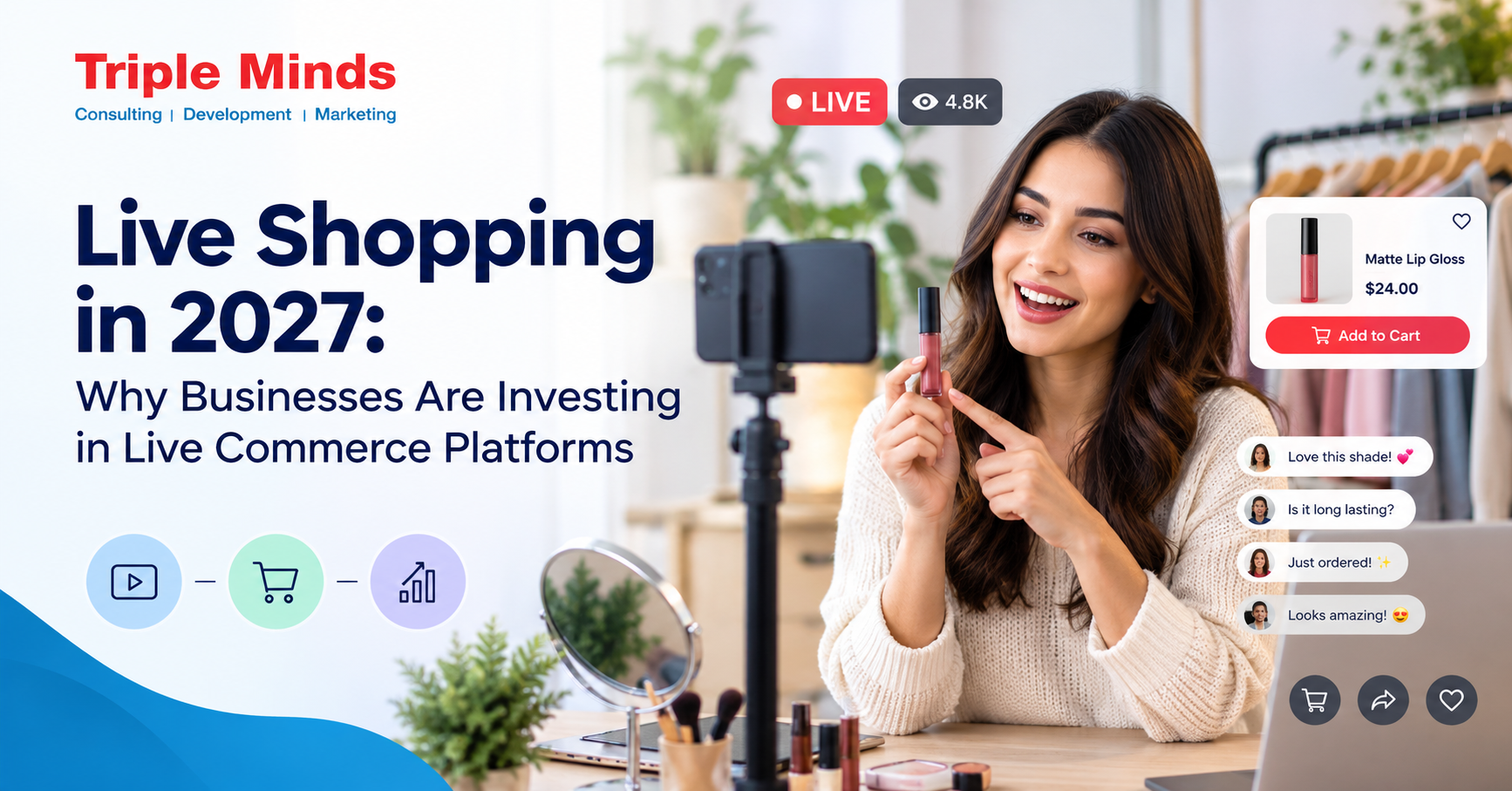
Livestream shopping platforms have taken over the US market. Instead of relying on traditional shopping apps, people find it convenient to see products live, bid, and buy. Till the year 2024, live shopping like a Whatnot clone was considered the future of ecommerce, but now it has already replaced traditional ecommerce platforms.
- $19.8 billion in sales: US livestream eCommerce sales are forecast to grow 35% year over year in 2026, according to EMARKETER.
- 58 million+ live shoppers: Nearly one-quarter of US digital buyers are expected to purchase through livestreams in 2026, creating opportunities for Whatnot-like apps.
Why is Live Commerce Booming in 2027?
Let’s understand why you, as an entrepreneur or a businessman, should invest in Live Commerce platforms like Whatnot Clone in 2027.
Store A has clean photos, a tidy description, and a “Buy Now” button.
Store B has a host holding the product up to the camera, answering questions in real time, and shouting out a buyer by name while 800 people watch a countdown toward a limited drop.
Which one gets the sale? Which one gets the follow, or the repeat visit? Isn’t the answer obvious?
Brands and entrepreneurs are no longer asking, “Should we try live selling?” They already know that they should invest in it.
Live Selling Closes the Trust Gap that Static Pages Can’t
Online shoppers are no longer interested in exploring the product images, checking reviews, and reading product descriptions. You know why? Because even after investing this much, they still end up either with the wrong product or a low-quality article.
On the other hand, live commerce platforms allow users to have real-time interaction with the product seller or owner. They can watch the product, raise concerns, and receive answers within 10 sec. In live shopping platforms, you can see the seller showcasing the product or the sealed box on camera. There is no scope of photoshop because everything is happening in real time.
Trust built this way doesn’t fade when the stream ends. It attaches to the host and the brand, which makes the next purchase easier.
Urgency is Built into the Format
There is a high potential that shoppers will ignore a “limited stock” banner or links but will not be able to resist a live auction or a countdown timer. When buyers see others bidding, they will feel encouraged to make a decision before the opportunity disappears.
Unlike traditional eCommerce, which often relies on pop-ups and banners to create urgency, live commerce builds excitement naturally through real-time interaction.
Entertainment Keeps Shoppers Interested – Lower CAC Cost
Customer acquisition cost keeps increasing. Paid ads are expensive, highly competitive, and easier to scroll past. Whereas a well-executed live video changes the economics as people choose to show up, engage, and buy along the way.
Think about it this way. An ad interrupts someone’s evening or scroll experience, while a live show becomes an entertainment source and platform engagement increases.
It Turns Buyers into a Community
People who consume live commerce content start recognizing their usernames. They cheer, react, or comment when their friends win an auction. This improves community engagement. This kind of strategy is something that email marketing and retargeting paid ad campaigns often fail to create.
Community building is important for commercial intent, because it raise repeat purchase rates and lower churn. A loyal live audience is a revenue base that you can forecast, not a spike that you have to re-buy every month.
Faster Inventory Movement and Better Margins
For resellers, collectors, boutique brands, and anyone sitting on unique or limited stock, live selling is a fast exit. Slow-moving inventory gets a second life when a host tells its story on camera. Auction formats can even push prices above what a fixed listing would have achieved, because competitive bidding pulls up what people are willing to pay.
Businesses Gain Valuable Customer Insights
Every live session generates information about customer behavior. Businesses can track which products attract attention, when viewers leave, what questions they ask, and which sessions generate sales. These insights help improve product selection, pricing, and content without waiting for monthly reports.
Live commerce can increase conversions, strengthen customer loyalty, and help businesses understand their audience better. The result is a more informed approach to selling. Businesses can use these findings to refine their strategy instead of relying solely on monthly eCommerce reports.
Launch Your Live Commerce Platform Faster with Triple Minds
Bring your live shopping business to market faster with Triple Minds’ white-label live shopping platform. Get a ready-made solution with live streaming, real-time auctions, seller tools, secure payments, and an admin panel, customized to your brand and business requirements.
Explore White Label Live Shopping Platform
How Does a Whatnot-Like Live Shopping App Work?
A Whatnot clone is a live-streaming shopping and auction platform that combines livestreaming with marketplace functionality. It allows sellers to host live sessions, demonstrate products, and interact with viewers in real time.
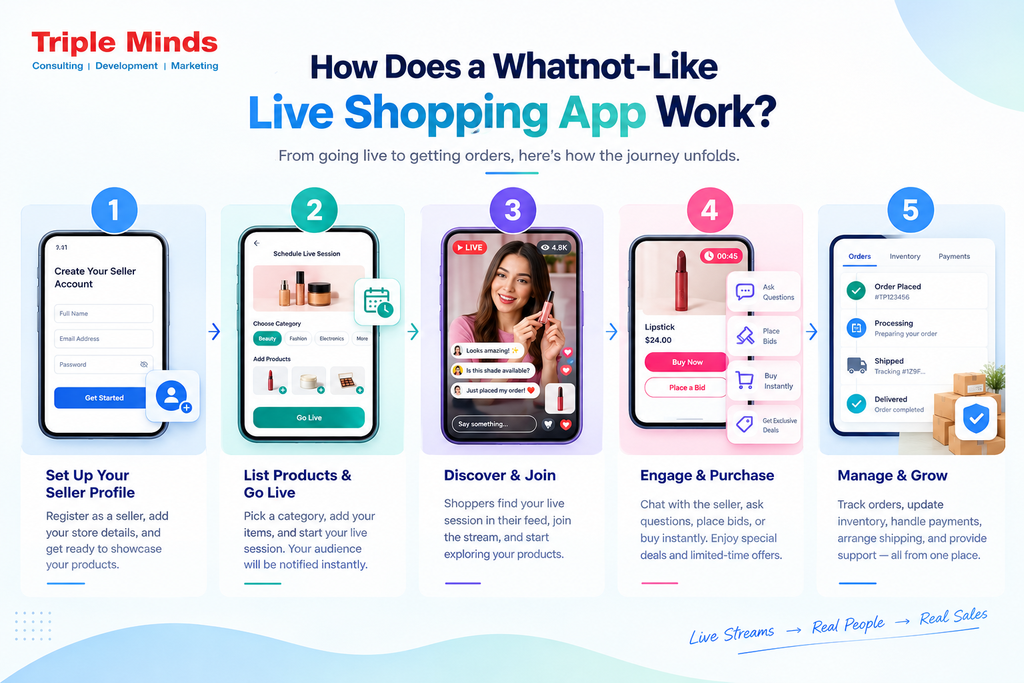
Step 1: Sellers create an account by registering, and from this account they can upload or list products and schedule their upcoming live stream.
Step 2: After completing the seller registration, sellers can choose a category, add their products, and start a live session. Simultaneously, your subscribers will get notified about the session.
Step 3: What is the point of having a session if there is no one seeing it? Therefore, customers interested in your products will open their feed and encounter the live session. They will join and begin to bid.
Step 4: Customers interact and purchase. Depending on the selling format, viewers can ask questions, place bids, purchase products at fixed prices, or participate in limited-time promotions.
Step 5: From transaction records and inventory updates to payment processes, all these tasks are tracked and help sellers manage shipping, order status, and customer support.
Key Differences Between Live Shopping and Traditional E-Commerce
Customer Experience
Traditional shopping platforms provide self-paced shopping, which means customers can browse at their own convenience. Also, it supports static content presentation and limited sensory engagement(customers can only see product pictures).
Talking about live shopping platforms, they offer a more real and dynamic shopping experience. Products can be represented live, which enables users to view products in action. the boons doesn’t stop here. In live streaming shopping platforms, sellers can provide a closer and more real shopping experience.
Engagement and Interaction
Interaction is limited in conventional shopping applications, forcing customers to wait longer to receive feedback or reply through emails or integrated customer service platforms. In the meantime, customer loses its interest.
Live shopping platforms eliminate these drawbacks, enabling two-way communication where viewers can ask questions and receive immediate answers. This feature encourages viewers to interact with the seller. Based on audience feedback, hosts can customize the content even during the session. Hence, you will receive a more personalized experience.
Conversion Rates
When exploring static commerce applications, customers can take longer to decide whether they want to make a purchase or not. Therefore, the conversion rate is generally 2.7%. Also, because customers rely on images that you upload, there are more chances that you will receive return requests.
In Whatnot-like applications, customers make instant purchases and have low return rates. This is because sellers demonstrate their product in real-time. Therefore, the conversion rate is 50% to 60%.
Price Flexibility
Traditional stores run on fixed prices, with the occasional sitewide discount. Live platforms add real-time mechanics: auctions, countdown drops, flash deals, and giveaways. The price is sometimes decided by the crowd in the moment, which means a rare item can earn what it’s truly worth instead of what a listing guessed.
Quick Comparison
| Factor | Traditional Shopping Platform | Live Commerce Shopping Platform |
| Shopping style | Solo, self-directed browsing | Shared, real-time experience |
| Pricing | Fixed or discounted | Auctions, drops, flash deals |
| Urgency | Manufactured (banners, timers) | Natural, visible, social |
| Trust built by | Reviews and product photos | Live demos and instant answers |
| Main draw | The product catalog | The seller and the show |
| Engagement | Clicks and sessions | Chat, bids, follows, return viewing |
| Traffic pattern | Steady and spread out | Spikes around scheduled shows |
| Retention driver | Discounts and email | Community and habit |
| Core tech | Catalog, cart, checkout | Low-latency streaming, real-time bidding, live chat, instant checkout |
| Revenue levers | Commissions, ads, memberships | Commissions, promoted shows, gifts and tips, subscriptions |
How Live Commerce Platforms Make Money?
For the successful implementation of a live commerce platform, there is a whole bunch of features that should go beyond the video streaming and the purchase button. These features should be oriented toward sellers, buyers and platform managers, ensuring reliability throughout the shopping process.
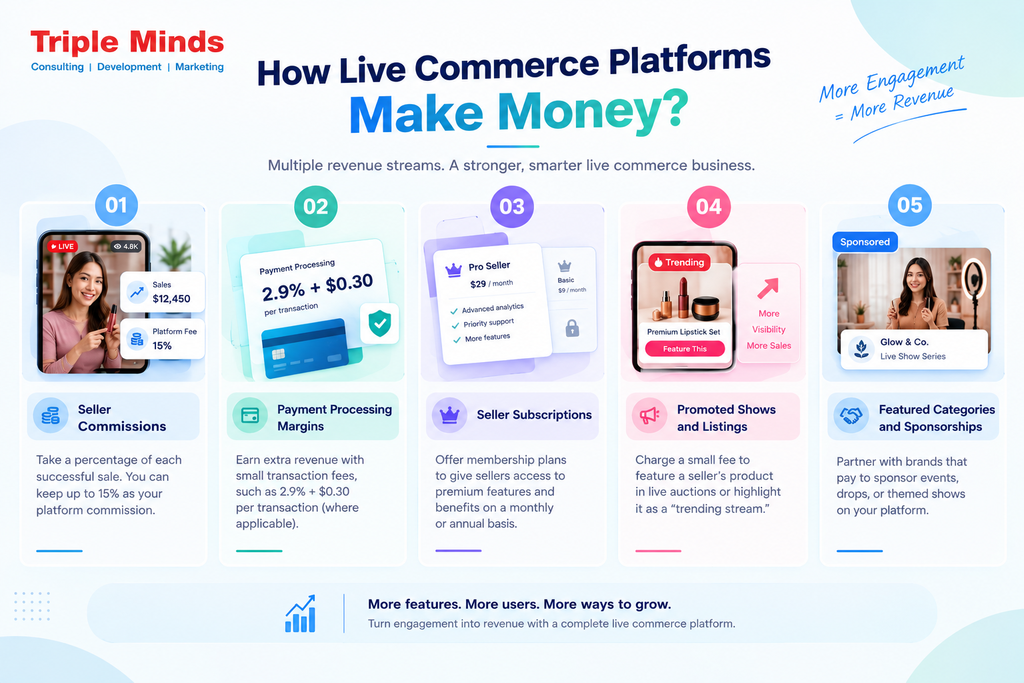
- Seller commissions: As an owner, you can set a commission amount on each completed purchase. This allows the live commerce platform to retain up to 15% of the preset commission.
- Payment processing margins: Small fees on transactions where applicable. In this way, you will earn additional revenue by charging a convenience fee: 2.9% + $0.30- per transaction.
- Seller subscriptions: Owning a live commerce platform give you a big advantage; you can decide who can have access to certain features. Integrate membership plans where users will need to pay you on a monthly or annual basis to unlock specific benefits.
- Promoted shows and listings: To seller who want to push their product, you can charge micro fee to feature their listing in a live auction as a “trending stream”.
- Featured categories and sponsorships. You can partner with brands that pay to sponsor events, drops, or themed shows.
Essential Features of a Live Commerce Platform
A successful live shopping application needs more than a video player and a purchase button. Its features must support sellers, buyers, and marketplace administrators while keeping the shopping experience reliable.
Features for Buyers
- Live video streaming
- Live chat and reactions
- Real-time bidding
- Product discovery
- Integrated checkout
- Seller following and notifications
- Order tracking
- AI-powered shopping assistance
Features for Sellers
- Livestream management
- Product and inventory management
- Auction and pricing controls
- Audience engagement tools
- Sales analytics
- Order and shipping management
Features for Administrators
- Seller verification
- Commission management
- Content moderation
- Payment and refund management
- Platform analytics
- Security and access controls
Which Businesses Can Profit from a Whatnot Clone?
Live commerce is a versatile medium that can effectively promote a variety of products that require a personal touch, have a strong community around them, feature limited availability, or be evaluated in person.
- Collectibles and trading cards communities could utilize a Whatnot clone to browse other users’ offers, ask for details, and participate in auctions or sales.
- Fashion and cosmetics brands could engage with customers and conduct product showcases.
- Tech and gadgets sellers could highlight the features and performance characteristics of their products.
- Vintage goods and bazaars could provide an opportunity for users to examine the items closely to evaluate their condition and other qualities.
- Hobby-based marketplaces could cater to specific niches and offer rare collectibles, toys, comics, sports cards, and other goods related to niche communities.
- B2B marketplaces could feature supplier directories with detailed information about the products they offer, host product showcases, and organize Q&A sessions with representatives.
- Retail stores and multiple-vendor marketplaces could supplement their existing inventory by featuring their wares in a live commerce setting.
How Much Does It Cost to Develop a Live Commerce Shopping Platform?
| Development Plan | Estimated Cost | Features |
| Basic live shopping app | $20,000–$40,000 | User accounts, livestreaming, product listings, chat, and basic checkout |
| Advanced live commerce marketplace | $40,000–$80,000 | Buyer and seller dashboards, auctions, notifications, analytics, and marketplace administration |
| Feature-rich Whatnot-like platform | $80,000–$150,000+ | Advanced bidding, scalable streaming, moderation, integrations, sophisticated analytics, and additional marketplace features |
| White Label Live Shopping Platform | $4000-$16000 | You will recieve all live commerce application features customized to meet your business requirements. |
Estimate the Development Cost of Your Next Live Commerce Platform
Planning a live shopping app? Use Triple Minds’ App Development Cost Calculator to estimate your project budget based on real-world app development projects. Get a clearer picture of potential development costs and plan your live commerce platform with greater confidence.
Calculate Your App Development Cost
Ready to Build Your Own Live Commerce Marketplace?
Live commerce isn’t a passing trend. It’s a shift in how people want to shop: together, in real time, with people they trust. The businesses investing now aren’t chasing hype. They’re claiming audiences and building assets while the space is still open.
We build white label live commerce platforms, including Whatnot-style marketplaces, designed to be launched under your brand, shaped around your niche, and ready to scale with your community. Real-time streaming, auctions, seller tools, secure payments, and an admin panel are all part of the foundation, so you can spend your energy on sellers, audience, and growth.
If you’ve been circling the idea, this is the moment to turn it into a plan.
Get in touch with us for a free consultation and a walkthrough of what your live commerce platform could look like. Let’s build the stage your audience will show up for.
Quick Answers to Common Questions
Is live shopping suitable for small businesses and startups?
Yes. Small businesses and startups can use live shopping to demonstrate products, answer customer questions, and build relationships with potential buyers. Entrepreneurs can also launch a niche marketplace focused on a specific category, such as collectibles, beauty products, fashion, or hobby merchandise, rather than competing with broad eCommerce platforms from the beginning.
Can I build a live shopping app with an auction feature?
Yes. A live shopping app can include auction functionality that lets sellers list items, set starting bids, and accept bids from viewers during a stream. The platform may also require bid validation, synchronized timers, outbid notifications, auction-ending rules, and payment handling for winning bidders. These requirements should be planned carefully to keep bidding fair and reliable.
Can AI improve the live shopping experience?
AI can support live shopping through personalized product recommendations, automated customer support, stream summaries, product discovery, and sales analytics. Depending on the platform, AI may also help sellers identify popular products or understand viewer engagement. These features should address specific business needs rather than be added simply to make the app appear more advanced.
Should I build a custom live commerce app or use an existing platform?
An existing platform can be useful for testing demand quickly, particularly when a business has limited technical resources. A custom app may be more suitable when the business needs control over its branding, auction rules, seller workflows, monetization, integrations, or customer experience. The decision should consider the initial budget, long-term operating costs, scalability, and how much differentiation the business requires.
Got a project in mind? Let’s build it together.
We work with founders and product teams across consulting, development, and growth marketing. Tell us what you’re building and we’ll show you how we’d ship it.