
Why do viewers prefer OTT platforms over traditional television? The answer is simple: convenience and choice. For better understanding, think of Netflix- you can watch your favorite shows, and movies whenever you want and from whatever devices you have.
OTT Streaming service platforms are productive because they allow users to access their favorite content on smartphones, smart TVs, tablets, laptops, and other connected devices. This shift in viewing habits has opened up new opportunities for entrepreneurs, startups, and media companies. With the right OTT platform, you can deliver content directly to viewers and generate revenue through subscriptions, advertisements, or pay-per-view models.
But how do you turn this idea into a working streaming business?
That’s what this guide covers.
In this blog, we will go through steps that show how you can launch an OTT streaming service app in the United States. Let’s move forward:
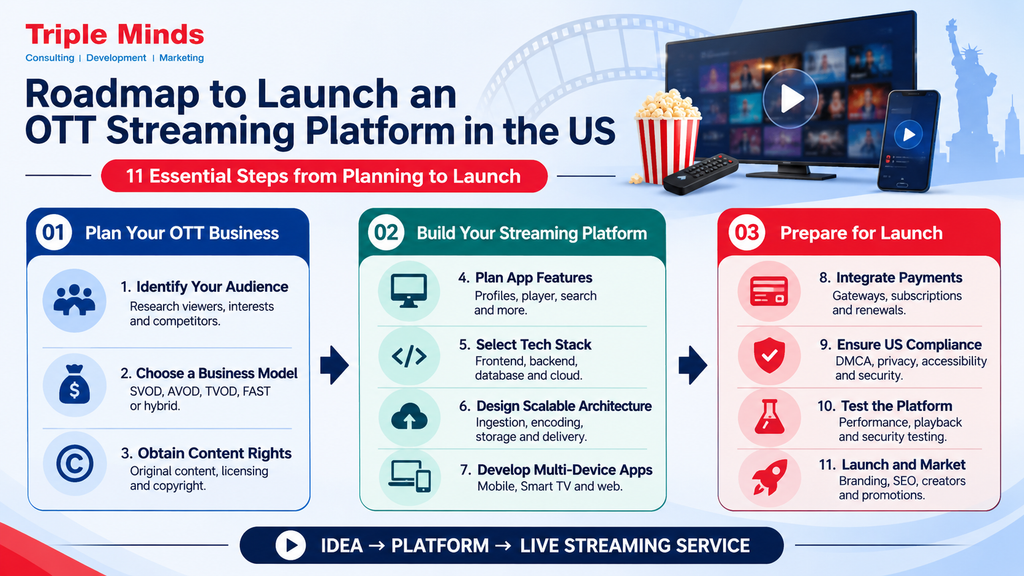
Step 1: Identify Your Target Audience
Before starting OTT app development you should understand your target audience. The US streaming market is already crowded with platforms like Netflix and Prime Video, launching a new platform will need a lot more than just development.
- You can start your app launch process by building a development plan.
- Start by learning what your potential viewers love to watch.
- Look at their age groups, interests, content choices, and viewing habits.
- Find do they prefer regional films, documentaries, live sports, or niche entertainment?
To develop a better mobile app development plan, you can conduct in-depth competitor research. It will help you spot gaps in the OTT market. So that you can use these insights to choose your niche and build a unique value proposition.
Step 2: Choose the Right OTT Business Model
How will your OTT platform make money? Distinctive monetization models cater to distinct audiences and types of content. Hence, selection of the appropriate model at an early stage will affect features of the application, integration of payments, ads infrastructure, and strategies of content distribution.
Here are the main types of OTT monetization models.
1. Subscription Video on Demand (SVOD)
Under SVOD, users pay a recurring subscription fee for access to the library of content. Depending on the model of the pricing, subscribers have a choice between monthly or annual plans.
- Recurring revenue.
- Opportunities for building long-lasting relations with customers.
- Improved forecasting of the revenue.
- Flexible subscription packages.
2. Advertising-Based Video on Demand (AVOD)
Under the AVOD model, users can watch the content without subscription since revenue is generated through ads.
Pros:
- Low barriers for users to start watching.
- Opportunities to attract a large audience.
- Revenue generation through ads.
- Opportunities to monetize free users.
3. Transactional Video on Demand (TVOD)
TVOD allows users to pay for individual movies, shows, events, or other content. This model typically offers rental and purchase options. For example, viewers may rent a newly released movie for a limited period or purchase permanent access where the relevant rights permit it.
Advantages:
- Revenue from individual transactions.
- No requirement for recurring subscriptions.
- Flexible pricing for premium content.
- Suitable for exclusive releases and special events.
4. Free Ad-Supported Television (FAST)
FAST platforms provide scheduled, linear-style television channels over the internet without charging viewers a subscription fee. Content is organized into channels and supported by advertising.
5. Hybrid Monetization Model
A hybrid model combines two or more revenue strategies, allowing businesses to serve different customer segments while diversifying their revenue streams.
- Free content supported by advertisements.
- Premium subscriptions without advertisements.
- Individual rentals for exclusive movies.
- Special event purchases.
Step 3 – Obtain Licensing Rights
Content is one of the most important parts of any OTT streaming platform. Without valuable content, even the most advanced and well featured app will fail.
Ensure you know how you will obtain and distribute your video content legally. You can do this by:
Creating Original Content
Creating original content will help you stand out and create a unique brand. You can create movies, web series, documentaries, learning programs, interviews and more.
Licensing Content
You can negotiate licensing deals with production companies, independent filmmakers, studios and content distributors. This should include:
- What content is being licensed.
- Where it can be distributed.
- How long the license lasts.
- Streaming rights.
- Whether it can be used for subscription or advertising.
- Whether it is exclusive or non-exclusive.
- What devices and platforms can it be used for.
- Revenue sharing.
Working With Independent Filmmakers
Some independent filmmakers, video creators and niche content creators may be interested in releasing their content via new OTT platforms, therefore you can create partnerships based on licensing fees, revenue sharing or other commercial agreements.
US Copyright
As one of the top app development companies, we understand how important it is to ensure you comply with copyright laws in the US. The Digital Millennium Copyright Act sets out a framework to deal with certain copyright claims.
If your OTT platform allows users or third parties to upload content, you need to consider whether the DMCA Safe Harbour applies. Set up a proper notification and takedown process.
Also consider music licensing, performance rights, talent contracts, distribution rights and more.
Step 4 – Decide What Features You Want on Your OTT App
Features are a key part of ensuring your streaming service will be easy to use and engaging.
Within your initial version, you should consider including features that will help users find and play content, manage their accounts, pay and manage your app.
What Features Should You Include?
User Sign Up/Login
This allows users to create an account using their email address or login options. You can also include authentication, forgotten passwords and user account management.
User Accounts
With multiple user accounts, users can have their own personal history. You can offer personalization within the user account.
Content Management System
You can upload, organize, manage and publish your video content within your CMS. Key features include uploading videos, categorizing, managing metadata, adding subtitles and much more.
Video Player
One of the most important features of your OTT application is a reliable video player. This should include adaptive bitrate, play/pause, change speed, subtitles, screen changes and continue watching.
Search
This will help users find relevant content based on search, categories, genres, filters and recommendations. Having well organized content will increase engagement.
Watch List/Continue Watching
This will let users add content to their watch list and continue watching videos. This makes your application easy to use and encourages users to return.
Subscription/Payment Management
Users should be able to choose their subscription package, manage their payment details, view their transaction history and cancel their subscription.
Push Notifications
This will notify users about new content, live events, subscription updates and recommendations.
Admin Dashboard
This will give your business team full control over your OTT platform. It should include user, subscription, content, promotion, advertising and analytics tools.
Step 5 – Choose The Right Tech Stack
Choosing the correct tech stack will ensure your OTT application will run efficiently, scale, securely and at a reasonable cost. Common OTT tech stacks include:
Front End
This is what users will see and interact with. Based on your target audience you may need:
- iOS Apps
- Android Apps
- Web Apps
- Android TV Apps
- Apple TV Apps
- Amazon Fire TV Apps
- Roku Apps
- Samsung Tizen Apps
- LG webOS Apps
Back-End
This is where your application runs. This will include things like user authentication, content metadata, subscription management etc. Common back-end languages include Node.js, Python, Java and more.
Database
Stores user accounts, content details, subscription details, user history and more. This will include tech like PostgreSQL or MySQL along with caching and search.
Cloud
This will provide the computing power, storage and networking required to run your OTT service. Popular cloud services include Amazon Web Services, Microsoft Azure and Google Cloud.
Video Conversion
Videos will need to be converted into the correct format and resolution for all devices and networks. Common video streaming formats include HLS and MPEG-DASH.
Content Delivery Network (CDN)
This will deliver your video content. A well set up CDN will help reduce latency, increase reliability and cope with high traffic.
Launch Your Netflix-Like OTT Platform Faster with Triple Minds
Get your streaming business off the ground in just 15 days with Triple Minds’ ready-to-launch Netflix Clone. Packed with pre-loaded, Netflix-like features, it helps you launch your own branded OTT platform faster.
Explore Netflix Clone
Step 6 – Choose A Scalable Architecture
To run your streaming service, your platform needs to be able to run and stream content. A scalable architecture will usually have multiple components. We’ve outlined them below:
Content Ingestion
This will receive video files or live video feeds from authorized content providers.
Video Conversion
This will convert your source video into multiple resolutions and bit rates.
Video Packaging
This will prepare your video for playback. It will include encryption and metadata.
Storage
Will store your source files, converted video, thumbnails, subtitles and more in the cloud.
Delivery
Your CDN will deliver your streaming content.
Back-End
This will manage your user accounts, authentication, subscriptions, content access and more.
Analytics
This will gather data on what users are watching, how your application is running, how well your videos are playing and more.
Step 7 – Create OTT Apps for Multiple Devices
In the US, users will use a variety of devices to access your streaming service. To ensure you can reach as many people as possible, you should consider creating your OTT service in phases.
Mobile Apps
Mobile apps will help users that prefer to watch using their smartphone or tablet. Focus on creating responsive apps that are secure, reliable and easy to subscribe.
Smart TV Apps
Based on your target audience you could consider creating apps for Roku, Amazon Fire TV, Apple TV, Samsung Tizen and LG webOS.
Web Apps
This will allow users to watch using their desktop/laptop browsers.
Cross Platform
Using cross platform will help reduce duplication when developing your app. At Triple Minds we aim to strike a balance between reusing code and using native features for devices and playback.
Step 8 – Add Payment Gateways and Subscription Management
Your OTT platform should have payment options that match your target audience. This could include credit/debit cards or digital payments.
App Store Payments
Apple and Google have strict guidelines around digital content and subscriptions. This will depend on your store, region, category and current policies.
As your OTT app development partner, we will ensure we’re aware of the latest App Store and Google Play requirements before linking to any external payments or alternate payment systems.
Subscription Management
A well designed subscription system will help increase transparency and increase customer trust. Ensure your platform can handle:
- Monthly & Annual Subscriptions
- Free Trials where applicable
- Upgrades & Downgrades
- Renewals
- Payment Failures
- Cancellations
- Refunds & Payments
Step 9 – Ensure Legal Compliance in the US
When launching your OTT platform in the US there are a variety of factors to consider.
- Copyright & DMCA
- Video Privacy Protection Act (VPPA)
- State Privacy Laws
- Children’s Privacy
- Accessibility & Closed Captions
- Payment Security
Step 10 – Test Your OTT Platform
Your streaming application should be reliable.
If your app looks great but causes buffering, payment issues or login issues then it won’t work. Before launching your OTT service platform in the US, ensure you thoroughly test your application. This should include:
- Functional Testing
- Performance Testing
- Load Testing
- Compatibility Testing
- Security Testing
- Playback Testing
Step 11 – Launch & Market Your OTT Streaming Service
Creating your OTT platform is only half the battle. Using a strategic marketing plan can help you get your streaming service noticed.
Create A Brand
Create a unique brand name, logo, website and branding. This will help your brand clearly show what type of entertainment you offer.
SEO
Expert SEO services will help your potential customers find your streaming platform. You can create specific landing pages for your content categories, genres, exclusive shows and target audience.
By optimizing your website with informative blog posts, metadata, faster loading times and the correct structured data.
Work With Influencers & Creators
Working with creators and niche influencers will help get your platform noticed by the right people. Choose partners based on the relevance to your audience and engagement.
Free Trials/Promotional Offers
Offering promotional access will encourage users to try your content. Ensure you’re clear about what the trial entails, when they’ll be renewed and how they can cancel.
How Does an OTT Platform Work?
An OTT platform will use a variety of systems to run. This include:
- Content Management System
- Video Conversion
- Streaming
- Content Delivery Network
- App
- Payments
Once you’ve uploaded your content to the CMS, your videos will be converted into multiple resolutions and formats. Once ready for streaming, your content will be distributed via a Content Delivery Network (CDN). Users will be able to watch your content using web apps, mobile apps and TV apps. Your platform will check if users are authenticated and have access to the subscription. Analytics systems will track how users are watching.
What is the Cost to Develop OTT Platforms?
When considering the development cost of an OTT platform, you must understand two different approaches. One is ready-to-launch, and the other is custom.
White-Labelled OTT Platform
A white label OTT platform can cost you between $12,000 and $25,000. It includes a ready-to-launch application that can be customized to meet your unique requirements. From content management systems to video streaming capabilities and much more, the white-label OTT service platform provides every essential feature.
If you are an entrepreneur looking to invest in a ready-to-launch OTT platform, Triple Minds is a mobile app development company that provides products like Netflix Clone. No need to wait a year; get a white-labelled OTT platform in just 15 days.
Custom OTT Platform
As compared to a white-label solution, custom OTT platform development services are premium. They can range from $50,000 to millions of dollars. It is an approach that involves development from scratch. All you need to do is consult an app development company, share your idea, and an advanced development process will get started.
Why Launch an OTT Streaming Service in The US?
The US is one of the most advanced and competitive streaming markets. Customers are familiar with digital entertainment subscriptions, smart TVs and on demand video. Here are some key reasons why you should consider launching an OTT platform in the US:
- Increased Demand
- Customers in America are demanding more on demand entertainment.
- Niche Markets
Starting a platform for a specific audience can be a more realistic option. Potential niche markets include:
- Independent Films & Documentaries
- Regional & International Entertainment
- Faith Based Entertainment
- Fitness & Wellness Videos
- Learning & Training
- Children’s Entertainment
- Live Sports & Sports Related
- Music Concerts
- Industry Specific Videos
- Direct Relationship With Viewers
Having an independent OTT application will help you build a direct relationship with your audience. Rather than using third party platforms, you can build your own customer database, understand what they like to watch and talk directly to your subscribers.
Multiple Devices
A well developed OTT platform can be used across multiple devices. This can include Smartphones, Tablets, Desktop Browsers, Smart TVs & Streaming Devices. This means you can reach your viewers on their preferred device.
Why Choose an Experienced OTT App Development Partner?
Launching an OTT platform requires the right technology, a smooth user experience, secure content delivery, and a business model that supports long-term growth. That is why choosing an experienced development partner becomes crucial.
From planning the platform architecture to developing feature-rich mobile apps, Triple Minds handle every stage needs careful. We are a mobile app development agency that helps businesses turn their app ideas into functional streaming solutions. Our expertise in Netflix clone development allows us to build customized applications with features such as user profiles, subscription management, content libraries, video streaming, and admin dashboards.
Whether you want to launch a niche streaming service or build a subscription-based entertainment platform, we are here to help.
Worried About the Cost of Developing Your OTT Platform?
Get a personalized cost estimate with Triple Minds’ App Development Cost Calculator. Select the features and functionality you need to calculate an estimated development cost for your OTT streaming platform.
Estimate Your Cost Now
Conclusion
To launch an OTT streaming service in the United States, you need a clear audience, the right business model, quality content, reliable technology, and a marketing strategy that attracts subscribers.
If you are planning to enter the OTT market, we can help you bring your idea to life. We offer both custom and white label app development. For more details, you can explore our Netflix clone and custom app development services. Let’s turn your OTT business idea into a market-ready streaming solution.
Frequently Asked Questions About OTT Platform Launch in the US
Do I need a license to launch an OTT platform in the US?
You don’t need a single universal OTT license to launch a streaming service in the US. However, you must secure the necessary content distribution rights and comply with applicable copyright, privacy, consumer protection, and other relevant regulations.
Can I launch an OTT platform like Netflix?
Yes. You can build a Netflix-like streaming platform with features such as personalized recommendations, subscription plans, user profiles, content categories, and multi-device streaming.
How can I attract subscribers to my OTT platform in the US?
Start by targeting a specific audience and offering content that matches its interests. Promote your platform through social media, influencer partnerships, search engine optimization, referral programs, and free trials.
Can I launch an OTT app for both Android and iOS?
Yes. You can develop OTT applications for both Android and iOS devices. Depending on your business goals, you can also extend the service to smart TVs, web browsers, and other connected devices.
Got a project in mind? Let’s build it together.
We work with founders and product teams across consulting, development, and growth marketing. Tell us what you’re building and we’ll show you how we’d ship it.