OpenAI’s Agentic Commerce Protocol (ACP) Explained for Ecommerce Brands
Agentic Commerce Protocol (ACP) is emerging as a framework that enables AI agents to discover, compare, and purchase products on behalf of users. This guide explores how AI-driven commerce works, why it matters for ecommerce brands, and the practical steps businesses can take to prepare for autonomous shopping experiences.

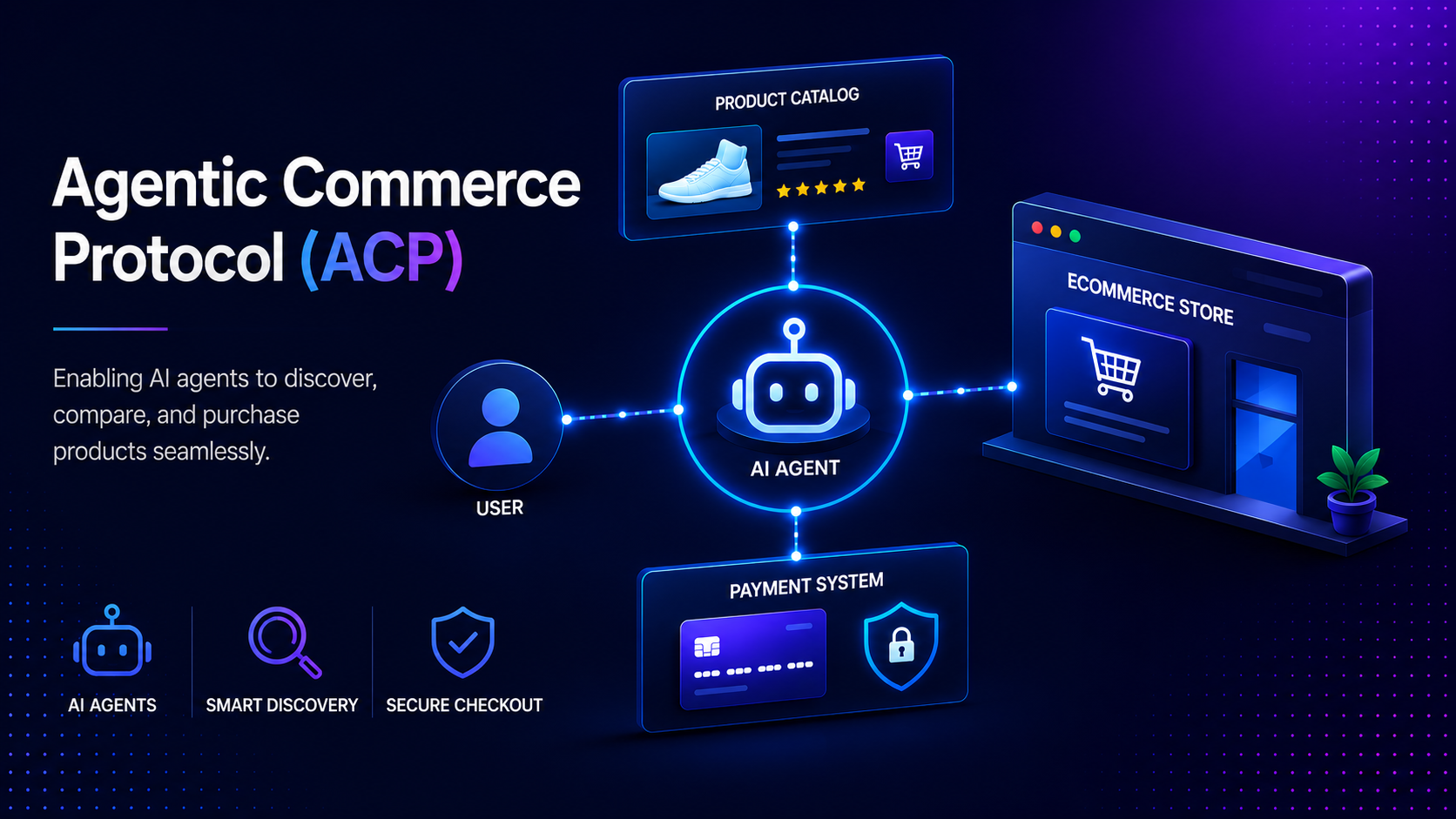
Online shopping means opening multiple tabs, comparing prices manually, reading reviews for hours, and finally clicking the “Buy Now” button yourself. Today, that experience is starting to change rapidly. Instead of people doing all the searching and decision-making, AI assistants are slowly becoming active participants in the buying journey. A shopper can now simply ask an AI tool to “find the best running shoes under $150 in blue color” or “reorder my monthly skincare products,” and the system can handle product discovery, comparisons, recommendations, and even checkout automatically.
This shift is giving rise to what many are calling agentic commerce, where AI agents do more than just assist shoppers. They actively make decisions, interact with ecommerce systems, and complete purchases on behalf of users with proper permissions. At the center of this transformation is the Agentic Commerce Protocol (ACP), a framework designed to help AI agents, ecommerce stores, payment systems, and product catalogs communicate with each other smoothly and securely.
For ecommerce brands, this is not just another technology trend. It represents a major change in how products may be discovered, evaluated, and purchased online in the coming years. As AI-driven shopping becomes more common, businesses may need to rethink how their ecommerce stores are structured, how product information is organized, and how their systems connect with AI-powered platforms.
At Triple Minds, we help businesses prepare for emerging AI-driven commerce trends through scalable AI solutions, ecommerce development, automation systems, and AI-ready digital experiences. In this blog, we’ll break down what OpenAI’s Agentic Commerce Protocol means, how AI-powered shopping works, and what ecommerce brands should do now to stay competitive in the future of autonomous commerce. Let’s first get to know what ACP really is.
What Is ACP (Agentic Commerce Protocol)?
Agentic Commerce Protocol (ACP) is a system designed to help AI agents interact with ecommerce stores and complete purchases on behalf of users. In simple terms, it creates a structured way for AI assistants, online stores, payment systems, and product databases to communicate with each other smoothly and securely.
ACP is a shared set of rules and instructions that helps AI agents and ecommerce stores talk to each other properly.
Without ACP:
- Every AI assistant would need a different custom integration for every online store.
With ACP:
- Everyone follows the same “shopping language,” so AI agents can buy from many stores automatically.
Unlike traditional ecommerce, where customers manually search for products, compare options, add items to carts, and complete checkout themselves, agentic commerce shifts much of that work to AI. Instead of clicking through multiple websites, a shopper can simply ask an AI assistant to find the best product based on their budget, preferences, or previous purchases. The AI then handles product discovery, comparisons, recommendations, and even checkout steps automatically.
The word “protocol” here does not simply mean a process or workflow. It refers to the rules, APIs, integrations, permissions, and communication systems that allow AI agents and ecommerce platforms to work together effectively. Without a proper protocol, AI systems would struggle to access accurate product information, verify inventory, process payments, or complete transactions securely.
This is why ecommerce businesses may need more AI-friendly product catalogs, structured product data, real-time inventory syncing, and seamless checkout systems in the future. As AI-powered shopping grows, brands that make their ecommerce infrastructure easier for AI systems to understand could gain a major advantage in product discovery and conversions.
Some early examples of agentic commerce can already be seen in AI shopping assistants, smart product reordering, conversational commerce, and AI-powered recommendation systems that help users discover and buy products with minimal manual effort.
Will Your Store Be Ready When AI Agents Become Buyers?
Customers are beginning to rely on AI assistants for product discovery, recommendations, and purchase decisions. Triple Minds helps ecommerce brands build intelligent shopping assistants, AI-powered customer experiences, and conversational commerce solutions that support the future of digital retail.
Explore Ecommerce Chatbot Development Services
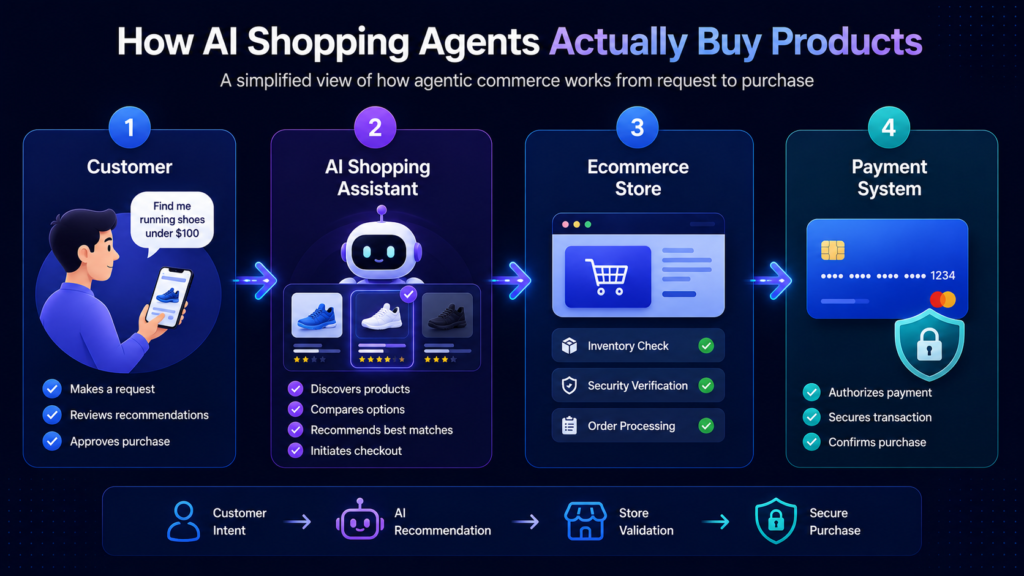
How AI Shopping Agents Actually Buy Products
Agentic commerce works through a connected ecosystem where AI assistants, ecommerce stores, customers, and payment systems work together to complete purchases automatically. Instead of manually browsing websites and handling every step of checkout, users can rely on AI agents to manage much of the shopping journey for them. Here’s how the process typically works:
- Customer
The user simply asks an AI assistant to find or purchase a product. Based on the request, the AI recommends suitable options, and the customer approves the final purchase using a saved or new payment method.
- AI Shopping Assistant
The AI system handles product discovery, comparisons, recommendations, and checkout steps. Once the user confirms the order, the AI sends the purchase request directly to the ecommerce store.
- Ecommerce Store
The online business receives the order request, checks payment and security details, confirms inventory availability, and processes the order if everything is verified.
- Payment System
The payment provider securely manages the transaction using encrypted payment details and authorization systems to ensure safe and approved purchases.
Read Also: Major Differences Between RPA and Agentic Workflows?
What ACP Means for Ecommerce Brands
If AI shopping becomes mainstream, ecommerce businesses may need to rethink how their online stores are built and optimized. Instead of designing websites only for human visitors, brands may also need to make their stores easier for AI agents to understand, evaluate, and interact with.
In traditional ecommerce, customers manually search, compare, and purchase products themselves. But with agentic commerce, AI systems could increasingly influence which products shoppers discover and buy. This changes how ecommerce visibility works.
Here’s what that could mean for brands:
- AI-friendly stores may become essential
Ecommerce websites may need to be optimized not just for users, but also for AI systems that scan and evaluate products automatically.
- AI agents could influence buying decisions
Instead of customers browsing dozens of websites, AI assistants may shortlist and recommend products directly.
- Product discovery may shift beyond Google
AI-powered recommendations and conversational search could become a major source of ecommerce traffic and conversions.
- Poor product data may reduce visibility
Incomplete descriptions, outdated pricing, or messy catalogs could make it harder for AI systems to recommend products accurately.
- Real-time systems will matter more
APIs, live inventory updates, pricing synchronization, and seamless integrations may become critical for AI-driven shopping.
- Checkout experience could affect AI recommendations
Faster checkout flows, secure payments, and transparent return policies may improve trust and influence AI purchasing decisions.
- Brands may need to adapt early
Businesses that prepare for AI commerce sooner could gain stronger visibility and a competitive advantage as autonomous shopping grows.
“Okay, AI shopping is coming. What should we actually do about it?”
How Ecommerce Brands Can Prepare for ACP
As AI-powered shopping evolves, ecommerce brands may need to make their stores more structured, AI-readable, and easier to interact with programmatically. Preparing early can help businesses stay visible in future AI-driven commerce ecosystems.
Here are some practical ways brands can prepare for ACP:
- Improve product catalogs
Use clear product titles, descriptions, specifications, categories, and attributes so AI systems can understand products more accurately.
- Strengthen product metadata
Add detailed information such as dimensions, compatibility, pricing, materials, shipping details, and availability.
- Use structured data and schema markup
Structured product information helps AI systems interpret ecommerce pages more effectively.
- Optimize for conversational search
Product content should align with how people naturally ask questions in AI chat interfaces and voice assistants.
- Keep inventory and pricing updated
AI agents rely on real-time data, so outdated stock or pricing information may hurt visibility and trust.
- Simplify checkout systems
Faster and more secure checkout experiences can support smoother AI-assisted purchasing journeys.
- Build stronger trust signals
Positive reviews, transparent policies, reliable delivery, and strong brand authority may influence which products AI systems recommend most often.
Read Also: Shopify MCP Servers – Capabilities, Real Use Cases & Cost Breakdown
Challenges and Risks of Agentic Commerce
While agentic commerce creates exciting opportunities, it also introduces new challenges for ecommerce businesses, AI platforms, and shoppers. As AI systems become more involved in purchasing decisions, brands will need to balance automation with trust, accuracy, and security.
Here are some of the biggest risks businesses should be aware of:
- Privacy and user permissions
AI shopping assistants may require access to personal preferences, payment methods, purchase history, and browsing behavior. Businesses will need secure permission systems and transparent data practices to maintain customer trust.
- AI hallucinations or incorrect purchases
AI agents may occasionally misunderstand requests, recommend the wrong products, or provide inaccurate information. Poor recommendations or incorrect purchases could negatively impact customer experience and brand trust.
- Brand visibility challenges
In AI-driven shopping, users may no longer browse dozens of ecommerce websites manually. This means some brands could lose visibility if AI systems favor competitors with better product data, stronger reviews, or more AI-friendly infrastructure.
- Dependence on AI platforms
Ecommerce businesses may become increasingly dependent on AI ecosystems and platforms for product discovery and sales. Changes in AI algorithms or platform policies could directly affect visibility and conversions.
- Payment and security risks
Since AI systems may handle checkout and transactions, secure authentication, encrypted payment systems, fraud prevention, and permission controls will become even more important.
Read Also: How Much Does It Cost to Build an AI Agent?
Industries That May Benefit the Most
Some industries are naturally better suited for agentic commerce because they involve repeat purchases, standardized products, or frequent buying decisions that AI systems can automate easily.
Here are some sectors that may benefit the most from AI-driven commerce:
- Grocery and daily essentials
AI assistants could automatically reorder household products, groceries, or recurring essentials based on shopping habits and usage patterns.
- Electronics
AI systems may help users compare technical specifications, prices, reviews, and compatibility when purchasing gadgets or devices.
- Fashion basics and repeat purchases
Products like everyday clothing, shoes, skincare, or personal care items could become easier to reorder through AI shopping assistants.
- Subscription-based products
Agentic commerce could simplify recurring purchases for products such as supplements, pet food, software subscriptions, or monthly deliveries.
- B2B procurement
Businesses may use AI agents to automate repetitive purchasing tasks, vendor comparisons, inventory management, and bulk ordering processes.
Real-World Examples of Agentic Commerce Emerging Today
Agentic commerce is no longer just a future concept. Many AI-driven shopping experiences are already starting to appear across ecommerce platforms, apps, and digital assistants. While the technology is still evolving, these early use cases show how AI is gradually becoming more involved in online purchasing decisions.
Some real-world examples include:
- AI shopping assistants
AI tools can already help users discover products, compare options, answer product questions, and recommend purchases based on preferences and budgets.
- Smart reordering systems
Some ecommerce platforms and smart devices can automatically reorder frequently used products such as groceries, household items, or office supplies when stock runs low.
- Voice commerce ecosystems
Voice assistants are making it possible for users to search, reorder, and purchase products using simple voice commands instead of manual browsing.
- AI-powered ecommerce recommendations
Ecommerce stores increasingly use AI systems to personalize product suggestions, upsell relevant items, and improve product discovery.
- Chat-based shopping experiences
Conversational AI systems are enabling customers to shop directly through chat interfaces where they can ask questions, compare products, and complete purchases naturally.
What the Future of AI-Driven Ecommerce Could Look Like
As AI systems become more advanced, ecommerce may shift toward highly automated and autonomous shopping experiences. AI agents could move beyond assisting users and begin handling entire purchasing workflows with minimal human involvement.
Here’s what the future of agentic commerce could look like:
- AI agents negotiating deals
AI systems may compare sellers, negotiate discounts, find better shipping options, and secure the best value automatically for users.
- Autonomous subscriptions
AI assistants could manage recurring purchases automatically by tracking usage patterns, preferences, and delivery schedules without manual input.
- Personalized AI storefronts
Shopping experiences may become fully customized based on user behavior, purchase history, preferences, budgets, and lifestyle patterns.
- AI-to-AI commerce ecosystems
AI agents representing shoppers could directly communicate with ecommerce systems, supplier networks, and business AI tools to complete transactions automatically.
- Human-free purchasing for routine products
Everyday purchases like groceries, office supplies, household essentials, or subscriptions may eventually happen automatically without users manually browsing or checking out products themselves.
Exploring AI Commerce for Your Business?
Whether you’re evaluating AI shopping assistants, conversational commerce, MCP integrations, or broader AI adoption strategies, Triple Minds can help you identify practical opportunities and build a roadmap tailored to your business goals.
Talk to Our Team
Conclusion
Agentic commerce is reshaping how products are discovered and purchased online. As AI-driven shopping grows, ecommerce brands may need AI-friendly product data, APIs, and checkout systems to stay competitive. At Triple Minds, we help businesses prepare for the future of autonomous commerce with scalable AI and ecommerce solutions.
Quick Answers to Common Questions
What is Agentic Commerce Protocol (ACP)?
Agentic Commerce Protocol (ACP) is a framework that helps AI agents interact with ecommerce stores, payment systems, and product catalogs to automate shopping experiences.
How is agentic commerce different from traditional ecommerce?
Traditional ecommerce depends on manual browsing and checkout, while agentic commerce allows AI systems to assist or automate product discovery, comparisons, and purchasing decisions.
Can AI agents actually buy products automatically?
Yes, AI agents can help users discover products, compare options, and complete purchases with user permissions and secure payment authorization systems.
Why does ACP matter for ecommerce brands?
ACP may influence how products are discovered and recommended in AI-driven shopping environments. Brands may need AI-friendly ecommerce systems to remain competitive.
How can ecommerce businesses prepare for AI-driven commerce?
Businesses can prepare by improving product data, using structured information, optimizing APIs, simplifying checkout systems, and building stronger trust signals.
Will AI shopping change ecommerce SEO?
Yes, AI-driven commerce may shift ecommerce SEO toward structured data, conversational search optimization, and AI-readable product information.
Got a project in mind? Let’s build it together.
We work with founders and product teams across consulting, development, and growth marketing. Tell us what you’re building and we’ll show you how we’d ship it.